
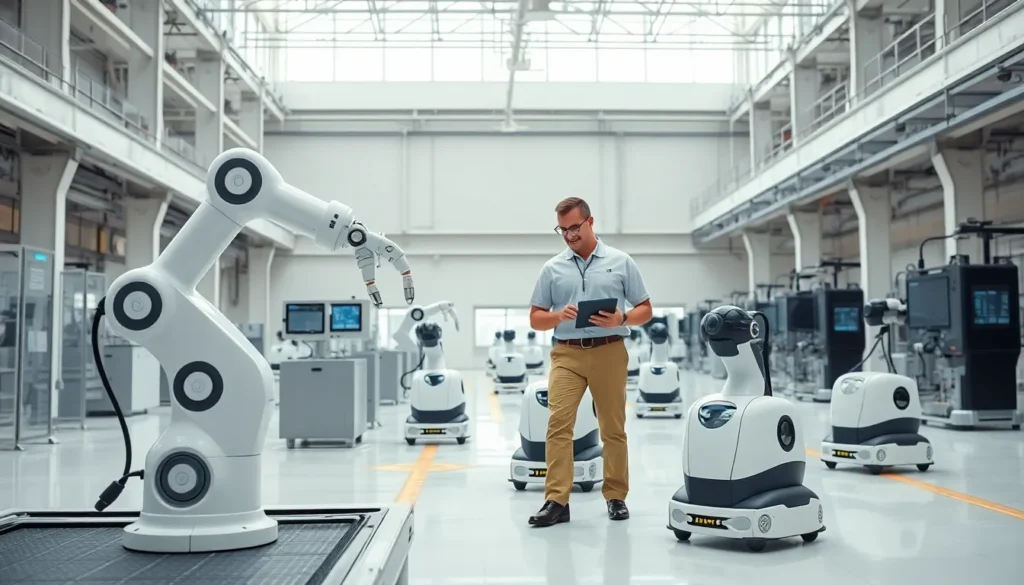

Robotics examples surround us daily, from factory floors to hospital operating rooms. These machines now perform tasks that once required human hands, eyes, and precision. The robotics industry reached $55.8 billion in 2024, and experts project continued growth through 2030.
This article explores practical robotics examples across four major sectors. Each section covers specific machines, their functions, and their measurable impact. Whether you’re researching automation trends or exploring career paths, these robotics examples show exactly how technology reshapes work and life.
Table of Contents
ToggleKey Takeaways
- Robotics examples span four major sectors: industrial manufacturing, healthcare, consumer services, and agriculture/environmental monitoring.
- Industrial robots like cobots and AMRs reduce labor costs, increase output consistency, and improve workplace safety—Amazon’s 750,000 warehouse robots cut order processing time by 75%.
- Healthcare robotics examples include surgical systems like da Vinci, rehabilitation exoskeletons, and UV disinfection robots that reduce hospital infections by 30%.
- Consumer robots such as Roomba vacuums and Starship delivery bots bring automation into everyday life, with over 40 million Roombas sold since 2002.
- Agricultural robotics examples address farming labor shortages while reducing herbicide use by up to 90% through precision weeding technology.
- The robotics industry reached $55.8 billion in 2024, with continued growth projected through 2030 across all sectors.
Industrial and Manufacturing Robots
Industrial robots represent the largest category of robotics examples in commercial use. These machines perform welding, painting, assembly, and material handling in factories worldwide.
Articulated Robots
Articulated robots feature rotary joints that mimic human arm movement. Car manufacturers like Toyota and Ford use thousands of these robots on assembly lines. A single articulated robot can weld 50 car bodies per hour with 0.1mm accuracy, far exceeding human capabilities.
Collaborative Robots (Cobots)
Cobots work alongside human employees without safety cages. Universal Robots pioneered this category, and their UR series now operates in over 50,000 facilities globally. These robotics examples handle repetitive tasks like packaging and quality inspection while workers focus on complex decisions.
Autonomous Mobile Robots (AMRs)
AMRs transport materials through warehouses and production floors. Amazon’s fulfillment centers deploy over 750,000 robots that move shelves to human pickers. This approach cuts order processing time by 75% compared to traditional warehouse layouts.
These industrial robotics examples share common traits: they reduce labor costs, increase output consistency, and improve workplace safety by handling dangerous tasks.
Healthcare and Medical Robotics
Healthcare robotics examples demonstrate how machines improve patient outcomes and extend surgeon capabilities. The medical robotics market exceeded $14 billion in 2024.
Surgical Robots
The da Vinci Surgical System leads this category with over 8,500 units installed worldwide. Surgeons control robotic arms through a console, performing minimally invasive procedures with magnified 3D vision. Patients experience smaller incisions, less blood loss, and faster recovery times.
Orthopedic surgery uses the MAKO system for knee and hip replacements. The robot guides surgeons to remove bone with sub-millimeter precision based on CT scans of each patient’s anatomy.
Rehabilitation Robots
Exoskeletons help stroke and spinal cord injury patients relearn movement patterns. The Ekso GT exoskeleton provides powered hip and knee motion during walking therapy. Clinical studies show patients using robotic rehabilitation improve walking speed 2.5 times faster than those using conventional therapy.
Pharmacy and Logistics Robots
Hospital pharmacies use robotic dispensing systems that fill prescriptions with near-zero error rates. The BD Rowa system stores 35,000 medication packages and retrieves items in seconds. These robotics examples reduce medication errors and free pharmacists to counsel patients.
Disinfection Robots
UV disinfection robots gained prominence during the COVID-19 pandemic. Xenex and UVD Robots produce machines that kill pathogens in patient rooms within minutes. Hospitals report 30% reductions in healthcare-associated infections after deploying these systems.
Service and Consumer Robots
Service robotics examples enter homes, hotels, and restaurants in growing numbers. This sector shows the broadest variety of robotic applications.
Household Robots
iRobot’s Roomba remains the best-selling consumer robot, with over 40 million units sold since 2002. Modern models map home layouts, avoid obstacles, and empty their own dustbins. Lawn-mowing robots from Husqvarna and Worx now maintain yards autonomously across Europe and North America.
Delivery Robots
Starship Technologies operates over 5,000 delivery robots across university campuses and suburban neighborhoods. These six-wheeled machines carry groceries, meals, and packages at walking speed. They use cameras, sensors, and GPS to navigate sidewalks and cross streets safely.
Nuro’s R2 vehicle handles grocery delivery for Kroger and Walmart in select U.S. cities. Unlike sidewalk robots, Nuro’s vehicle travels on roads at up to 25 mph.
Hospitality Robots
Restaurants deploy serving robots that carry dishes from kitchen to table. Bear Robotics’ Servi units work in over 10,000 locations. Hotels use robots for room service delivery and concierge functions. The Henn-na Hotel in Japan famously staffed its front desk with robotic dinosaurs, though it later replaced some with humans for practical reasons.
These consumer-facing robotics examples show how automation reaches everyday life beyond industrial settings.
Agricultural and Environmental Robotics
Agricultural robotics examples address labor shortages and sustainability challenges in farming. Environmental robots monitor ecosystems and respond to disasters.
Harvesting Robots
Fruit and vegetable harvesting requires gentle handling and ripeness detection. Agrobot’s strawberry harvester uses machine vision to identify ripe berries and picks them without bruising. Each robot replaces 30 human pickers during peak season.
Applied Robotics produces apple harvesting systems that work 24 hours daily during harvest. The machines use suction cups to pull fruit gently from branches.
Weeding and Planting Robots
Autonomous weeders reduce herbicide use by 90% through precision targeting. Carbon Robotics’ LaserWeeder identifies weeds using computer vision and destroys them with thermal lasers. Farmers save money on chemicals while reducing environmental impact.
Planting robots from companies like FarmWise transplant seedlings at consistent depths and spacing. This precision increases crop yields by 15-20% compared to manual planting.
Drone Applications
Agricultural drones survey fields for disease, pest damage, and irrigation problems. DJI’s Agras series sprays crops with pesticides or fertilizers using GPS-guided flight paths. These robotics examples cover 100 acres per day, a task requiring days of manual labor.
Environmental Monitoring Robots
Ocean robots like the Saildrone collect climate data across remote seas for months without refueling. The vehicle uses wind power for propulsion and solar power for instruments. Forest monitoring robots patrol for wildfires and track wildlife populations in protected areas.
These agricultural and environmental robotics examples prove automation extends beyond factories and homes into fields and ecosystems.


